

The rapid evolution of technology has given rise to new approaches for balancing technological progress with environmental responsibility. In this context, Green Cloud Computing is gradually establishing itself as a sustainable solution, aiming to optimize IT resources while reducing ecological impact. In 2024, this approach is gaining momentum with the increasing integration of Artificial Intelligence, creating an innovative synergy that is redefining the way companies approach digitalization.
What is Green Cloud?
Green Cloud refers to the use of eco-friendly technologies in data centers. It represents an innovative response to the environmental challenges posed by Cloud Computing. By adopting sustainable practices, this technology aims to optimize energy consumption (through virtualization, server consolidation, and resource management techniques), reduce carbon footprint, save costs, and promote the use of renewable energy sources (solar, wind, hydro, or other forms of green energy) in digital infrastructures. This approach, increasingly embraced by environmentally conscious companies, seeks to combine the power of the cloud with environmentally responsible practices, paving the way for a cleaner and more efficient digital future.
A catalyst for innovation
According to the latest report from Synergy Research Group, the global cloud computing market reached $500 billion in 2022 and is expected to reach $832 billion by 2025 (Research and Markets).
• In 2019, 94% of companies used at least one cloud service (Flexera)
• Today, 76% of companies prioritize the use of environmentally friendly cloud solutions (Lambert Consulting – source GreenBiz).
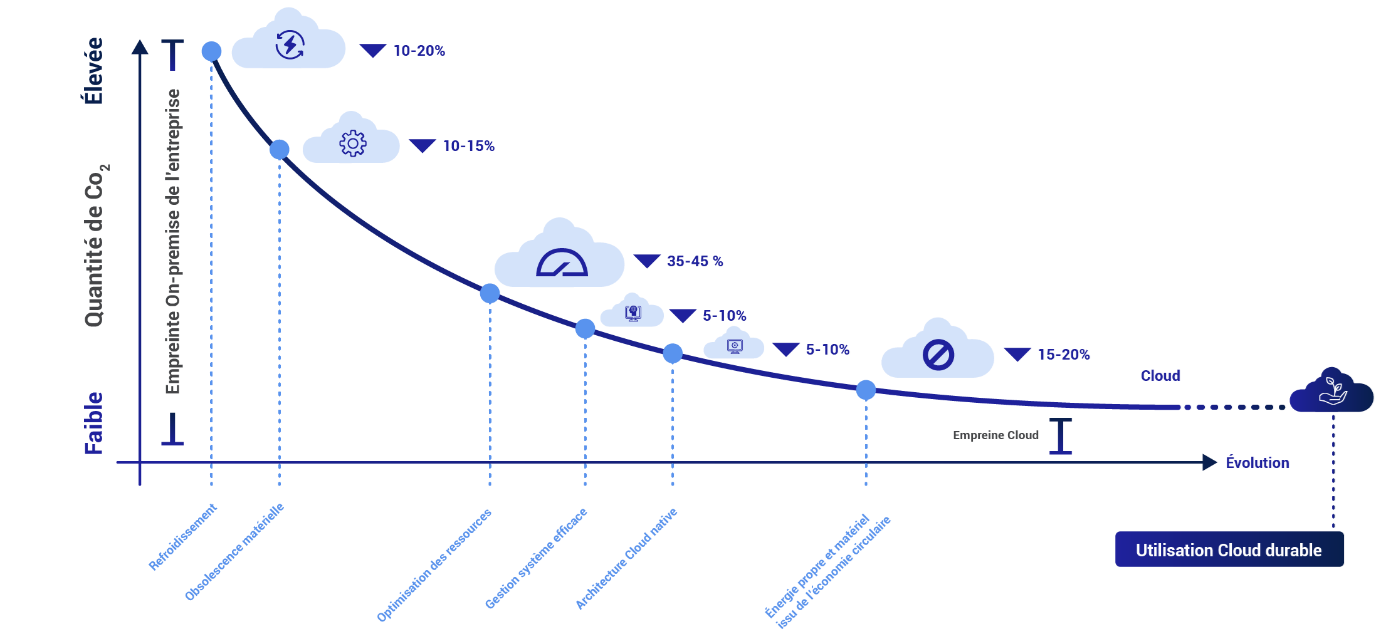
Cloud service providers adopting Green Cloud openly communicate their environmental practices to encourage the shutdown of unused instances and promote responsible resource usage. This technology is therefore becoming increasingly important for companies concerned about their brand image, meeting the growing expectations of customers and investors regarding social responsibility.
A new strategic direction
In 2024, the transition to cloud infrastructure, combined with eco-friendly practices, will offer substantial competitive advantages to forward-thinking companies. Furthermore, considering the adoption of AI-driven data management strategies will allow businesses to maximize operational efficiency while minimizing their environmental impact.
AI powering a Green Cloud: a promising synergy?
The rapid evolution of technology has led to a promising convergence between Artificial Intelligence and Green Cloud.
Effectively reducing energy consumption
AI is establishing itself as a major catalyst in the quest for more efficient energy consumption in Cloud Computing. By analyzing energy consumption patterns, AI enables a precise understanding of actual needs, facilitating adjustments. This ability to predict and adapt directly contributes to consumption reduction, a key aspect of Green Cloud.
Better management of data and resources
By analyzing data patterns, AI can identify redundant or unnecessary information, contributing to more efficient use of storage space. This optimization not only reduces storage-related costs but also the ecological footprint associated with maintaining large-scale infrastructures.
AI also plays a role in resource management. By using machine learning algorithms, AI can anticipate usage peaks and adjust capacity accordingly. This not only optimizes infrastructure utilization but also minimizes energy requirements during periods of lower demand.
Impact on innovation
This collaboration between AI and Green Cloud Computing opens up new opportunities for innovation. By automating and optimizing previously complex processes, AI frees up time and resources for exploring new eco-friendly solutions. Innovative applications, such as intelligent cooling systems or advanced predictive analytics, can thus emerge, enhancing the overall efficiency of data centers.
Towards a sustainable digital revolution?
In summary, the combination of AI and Green Cloud Computing represents a significant step toward a more environmentally friendly and efficient digital landscape. While their union offers substantial benefits, challenges remain. Optimizing AI itself, managing large volumes of data, and raising awareness among industry stakeholders about environmental issues are areas that require ongoing attention.
Nonetheless, this synergy provides an intelligent response to the challenges of IT resource management, suggesting that a transition to sustainable digital practices is achievable. As technology evolves, the alliance between AI and Green Cloud paves the way for continuous innovation, highlighting the importance of balancing technological progress with environmental responsibility.

Thomas SLOUKGI
Social Media and Editorial Communication Officer